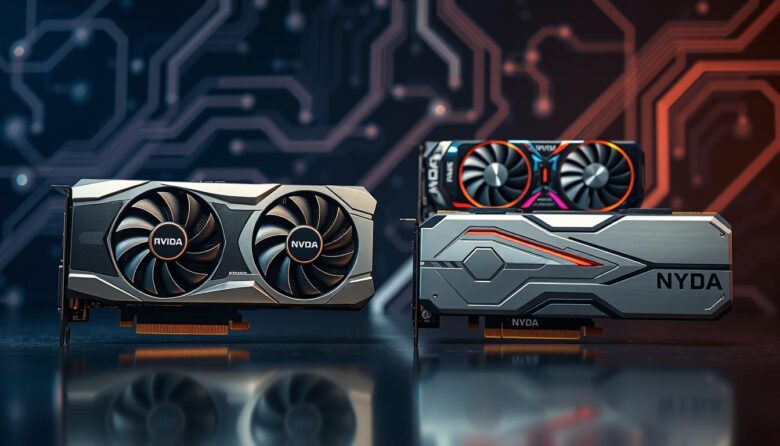
I write this guide to help you navigate the complex market of graphics cards. I focus on how reference design cards and partner cards differ in design, cooling, and performance.
I explain why a factory reference board can offer a clean, compact option while partner models add varied cooling and power delivery systems. These differences affect gaming performance, noise, and long-term hardware reliability.
I will use examples like the GeForce RTX family and the RTX 3080 to show how chip binning, memory choices, and liquid cooling options influence price and stock. My goal is to make it easy for you to choose the right graphics card for your case, budget, and performance needs.
Key Takeaways
- I compare reference design cards and partner cards to clarify trade-offs.
- Cooling and power delivery are major factors in performance and longevity.
- Partner cards often offer more options, like improved fans or liquid cooling.
- Market availability and chip binning can drive price and stock differences.
- Your choice should match your case, power budget, and gaming goals.
Understanding the Basics of Founders Edition vs Custom AIB
Let’s simplify what a reference board does and how partner companies change that baseline. I’ll use clear examples so you can choose the right card for your build. This helps when you weigh design, cooling, and price.
Defining Reference Design
A reference design is the factory board that sets hardware and firmware standards. Nvidia launched its 10-series Pascal architecture in 2016 and introduced the founders edition to compete directly with partner models.
Reference cards ensure the GeForce RTX family and the RTX 3080 meet strict specs for reliability and compatibility.
The Role of AIB Partners
AIB partners like Asus, MSI, Gigabyte, Sapphire, and Power Color take that baseline and add factory tweaks. They improve cooling, boost power delivery, and offer extra performance options.
“Choosing between a standardized board and partner cards often comes down to whether you value simplicity or extra features.”
- I find partner cards give more choices for gaming and overclocking.
- Reference cards keep the design compact and predictable for most builds.
Build Quality and Design Philosophy
I focus on how build choices shape the look and fit of modern graphics cards.
Reference design cards are usually dual-slot units to ensure they fit standard ATX cases. This compact layout keeps installation simple and predictable for most builders.
In contrast, many partner models grow into triple-slot monsters that demand larger EATX cases. You must measure clearance and check motherboard slot spacing before buying.
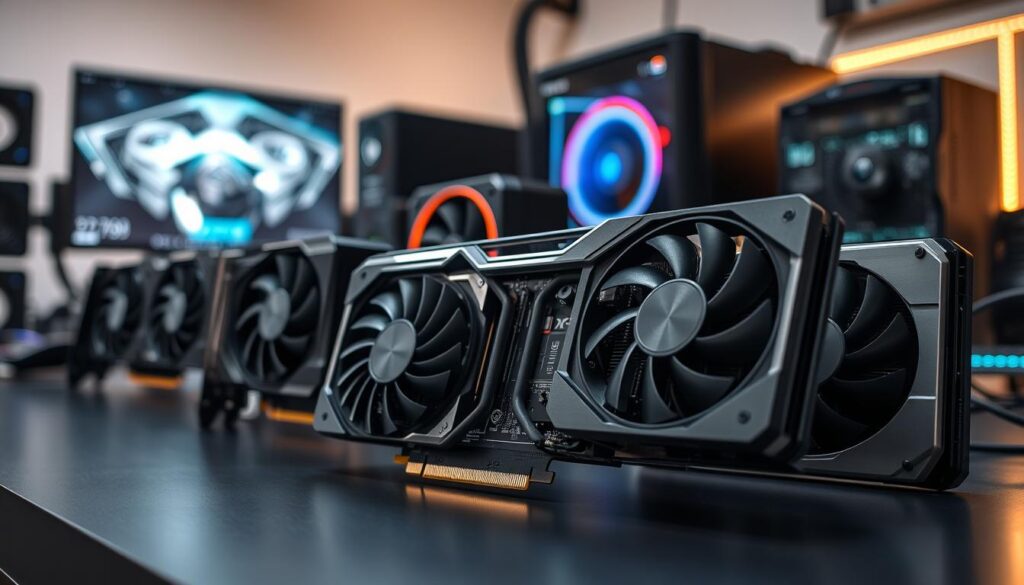
I often see metal backplates and reinforced frames on high-end models. These features improve rigidity and help distribute heat away from the gpu and memory.
For a GeForce RTX 3080, manufacturers commonly use premium materials to handle the extra thermal load. That choice matters for long-term reliability and consistent gaming performance.
“Build quality is one of the first signals of how a card will behave under load.”
- Dual-slot reference units favor compatibility and compact builds.
- Heavier models use backplates, thicker PCBs, and extra bracing for durability.
- Always confirm dimensions to avoid fitment issues in your case.
Thermal Performance and Cooling Solutions
How a card moves heat defines its real-world performance more than raw clock speeds. I look at common cooling choices and explain what matters for day-to-day gaming and long sessions.
Air Cooling Efficiency
Many partner cards use triple-fan layouts and thicker heatsinks. These designs pull more air across the GPU and memory, so temperatures stay lower under load.
Lower temps mean sustained boost clocks and fewer throttles. That is why some factory-overclocked cards beat standard reference models in extended benchmarks.
Liquid Cooling Compatibility
I often recommend liquid cooling for enthusiasts who want the quietest operation and best thermal headroom. Reference design boards usually have the broadest compatibility with aftermarket water blocks.
“If you plan a custom loop, prioritize a reference card to fit blocks without mods.”
Fan Configurations
AIB partners invest in fan blade geometry and bearings to improve airflow and cut noise. Smaller reference fans prioritize compactness over peak cooling.
In short, choose the cooling path that matches your case, noise tolerance, and whether you plan to add liquid cooling later.
Overclocking Potential and Power Delivery
Pushing a graphics card beyond stock speeds starts with its power delivery and board design. I look for extra power phases, beefy MOSFETs, and solid capacitors when testing cards.
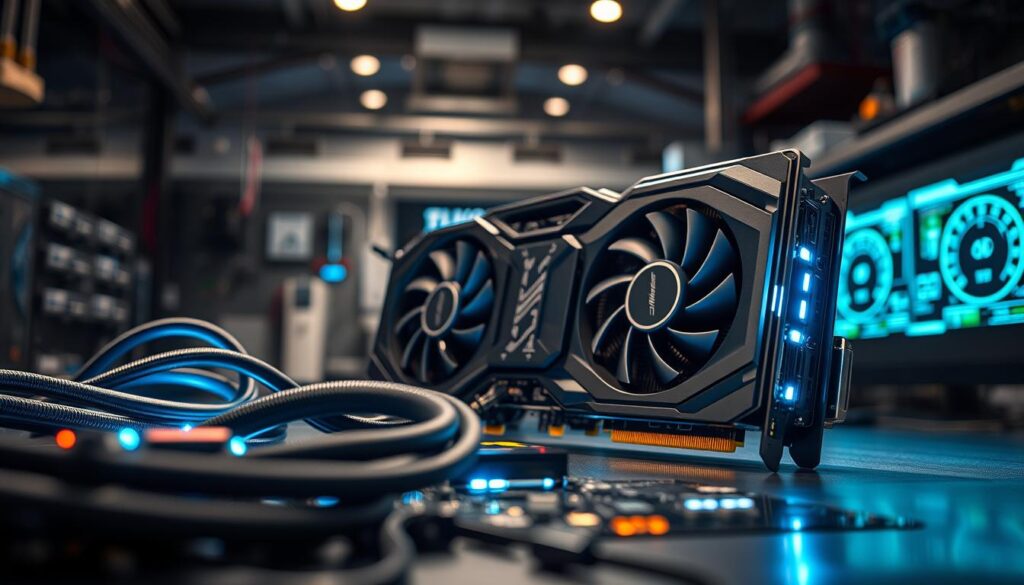
Many custom aib cards are engineered for extreme overclocking. They include robust power delivery systems to stabilize voltage for your gpu under load.
I also check memory chips and capacitor quality. High-grade memory lets a GeForce RTX 3080 hold higher clocks without errors. That improves sustained performance in long gaming sessions.
- Dual-BIOS on some boards gives a safety net if an overclock becomes unstable.
- Higher power limits mean the card can draw safely when you push clocks and voltages.
- Buying a premium card often raises the initial price, but you pay for the circuitry that unlocks more headroom.
“For enthusiasts, power delivery is the single biggest factor that separates a reference design from the highest-performing gpus.”
Market Availability and Pricing Trends
I track how launch-day supply and partner rollouts shape shopper choices. Early stock often favors the reference design, and that matters if you want a GeForce RTX card on day one.
Availability for Early Adopters
Reference cards usually arrive first and become the go-to choice for many early adopters of the GeForce RTX series. For example, the RTX 3080 had strong demand at launch and limited stock for reference cards.
Price trends also vary. Nvidia’s RTX 4090 FE lists at a $1599 MSRP, while premium partner models like the Gigabyte AORUS GeForce RTX 4090 MASTER often retail about $300 higher due to added cooling, power, and design work.
“Stock levels for reference cards can be tight, but they let buyers avoid long wait times for partner cards.”
- Timing: partners release their cards weeks or months later as they finalize cooling and power designs.
- Value: sometimes a basic partner card offers better price-to-performance than a premium edition card.
In short, decide if you need a launch-day card or can wait for broader stock and potentially better prices from partner cards.
Final Verdict for Your Next Graphics Card Purchase
C
,
I pick the card that fits three simple needs: looks, cooling, and price. For most people, simple graphics cards that match case size and budget are the right choice.
If you are a hardcore gamer and want top-tier performance from a GeForce RTX or an RTX 3080, I recommend a high-end partner card. Those cards often offer stronger power delivery and better cooling for sustained boost clocks.
Early adopters who need immediate availability and a clean reference design will like the Founders Edition. If you plan a custom loop, I advise choosing a reference card to ease water-block compatibility.
Ultimately, weigh power delivery, cooling, and price for your build. I always check specific model reviews before buying, since performance can vary between makers.
FAQ
What is the key difference between a reference design card and partner models?
I see reference design cards as the baseline release directly from the GPU designer, offering the original PCB layout, cooler concept, and firmware. Partner models from companies like ASUS, MSI, Gigabyte, and EVGA modify that base with different cooling solutions, power delivery systems, and factory-tuned firmware to target quieter operation, higher clocks, or improved thermals.
How do partner brands influence board and cooling design?
Partner brands add value by redesigning the printed circuit board, beefing up power phases, and fitting larger heatsinks or multiple fans. They often introduce RGB, reinforced backplates, or dual BIOS switches. These changes can raise manufacturing cost but usually deliver better sustained performance under load.
Are stock reference cards quieter than modified partner cards?
In many cases, reference cards are compact and tuned for a balanced acoustic profile, but modern partner coolers with bigger heatsinks and more fans can run fans slower and produce less noise at the same temperatures. My experience is larger, well-engineered coolers typically outpace the reference cooler in silence and thermal stability.
Do partner cards overclock better than the baseline model?
Yes—partner cards frequently include stronger voltage regulators, higher-quality capacitors, and more robust power delivery. These changes allow for higher sustained clock speeds and more headroom for manual overclocking. Still, silicon lottery and cooling capacity ultimately determine the final achievable clocks.
How important is power delivery when choosing a graphics card?
Power delivery matters a lot for stability and overclocking. A well-designed VRM reduces temperature spikes and enables consistent performance under heavy gaming or rendering loads. If I plan to push clocks or rely on long gaming sessions, I prioritize cards with beefier power solutions.
Can I fit large partner cards into every case?
Not always. High-end partner models often exceed standard length and thickness, with triple-fan coolers and reinforced shrouds. I always check the card’s physical dimensions against my case clearance, PCIe slot spacing, and adjacency to storage cages before buying.
How do liquid cooling options compare to air coolers?
Liquid cooling typically achieves lower GPU temperatures and quieter operation, especially for high-end chips. Many partner cards support all-in-one blocks or come in hybrid variants with factory-fitted water blocks. If I want the absolute lowest temps and minimal noise, liquid is the better path, but it adds complexity and cost.
Are hybrid and full-cover water blocks worth it for gaming rigs?
They are worth it if you prioritize silence, lower junction temperatures, or a cleaner thermally balanced loop for CPU and GPU. For most gamers on air or AIO cooling, a strong partner air cooler suffices. I recommend water blocks for enthusiasts who run high sustained loads or want a sleek custom loop look.
Will partner cards consume more power than the reference model?
Partner cards can have higher power targets and factory overclocks, which raises power draw under load. However, improved efficiency from better cooling and tuning sometimes offsets that. I look at the manufacturer’s stated power target and independent reviews to judge real-world consumption.
How does warranty and support differ between the original release and partner cards?
Warranty terms vary by manufacturer. Partner brands often offer multi-year warranties, extended RMA networks, and local service centers, which I find reassuring. The original designer’s retail-sold reference models may have different coverage, so checking warranty length and support policy is important before purchase.
Are partner cards always more expensive than the baseline release?
Partner models typically cost more due to upgraded cooling, PCB components, and factory overclocks. However, pricing fluctuates with market supply, promotions, and stock levels. I monitor MSRP, street prices, and review performance-per-dollar to decide if the premium is justified.
How do release-day availability and later stock trends compare?
On launch day, the original designer often ships a limited number of reference units while partner cards arrive in higher volumes later. Over time, partner models become more common, and prices stabilize. If I want a GPU right away, I prepare for markups; waiting usually opens more choices and better pricing.
Should I prioritize cooling, noise, or raw clocks when choosing a card?
It depends on my priorities. For quiet, long gaming sessions, I prioritize cooling. For peak frame rates and benchmarks, I pick higher factory clocks and robust power delivery. If I care about aesthetics and case airflow, fan configuration and cooler size matter most. I weigh those factors against price and case compatibility.
How do fan configurations affect performance?
Fan count and blade design influence airflow, noise, and heat distribution. More fans let each spin slower at a given thermal load, reducing noise. Advanced shrouds and airflow channels improve heat expulsion. I read independent thermal and acoustic tests to compare real outcomes instead of relying on specs alone.
Can I expect the same driver support across different brands?
Driver support comes from the GPU maker, so core driver releases are universal. Partner brands may supply firmware updates, BIOS tweaks, or utilities for fan curves and RGB. I keep my GPU drivers updated from the vendor and use partner tools selectively for tuning.
Does choosing a partner model affect resale value?
Popular partner models with strong coolers and brand reputation often retain value better. Limited-run or premium variants—like factory-overclocked or hybrid-cooled editions—can fetch higher resale prices. I consider brand reputation, condition, and included accessories when projecting resale value.

Ethan is a lead GPU reviewer and hardware analyst with a passion for pushing silicon to its absolute limits. With a background in computer engineering, he spends his days building custom test benches, analyzing frame-time graphs, and breaking down complex GPU architectures. When he’s not benchmarking the latest NVIDIA and AMD releases for VN Pixel, he is likely tweaking his custom-loop water-cooling setup to achieve the perfect overclock.